

Best Coffee Beans for Home Brewing: A Guide
Table of Contents
- Best Coffee Beans for Home Brewing: What Makes Them Stand Out
- Single-Origin vs. Blended Coffee Beans: Which Is Right for You
- Roast Level and Flavor Profile: Light, Medium, and Dark Explained
- Best Coffee Beans for Drip Coffee Makers and Pour Over Brewing
- How to Choose Coffee Beans Based on Origin and Processing Method
- Freshness, Roast Date, and How to Store Coffee Beans at Home
- Canvas and Clove's Premium Single-Origin and Blend Selection
- Frequently Asked Questions
Last Updated: October 21, 2026
Best Coffee Beans for Home Brewing: What Makes Them Stand Out
Finding the best coffee beans for home brewing means understanding what separates a mediocre cup from one that transforms your morning ritual. At Canvas and Clove LLC, we know what home brewers actually need to make the right choice.
The difference between great coffee and forgettable coffee often comes down to three factors: freshness, origin, and roast level. Most people overlook freshness entirely, buying pre-ground coffee that's been sitting on a shelf for months. Others chase exotic single-origin beans without understanding how to brew them. This guide cuts through the confusion.
What makes certain coffee beans stand out for home brewing isn't complicated. It's about whole bean coffee that's been roasted recently, sourced from regions with ideal growing conditions, and matched to your brewing method. Whether you're using a drip maker, pour-over, French press, or espresso machine, the best coffee beans for home brewing will have specific characteristics that work with your equipment.
Below, we'll walk you through how to evaluate beans by roast level and flavor profile, understand the impact of origin and processing method, and learn why freshness matters more than you think. We'll also show you how Canvas and Clove's selection of single-origin and blended options can elevate your daily brew.
Single-Origin vs. Blended Coffee Beans: Which Is Right for You
Single-origin coffee comes from one specific region, farm, or cooperative, giving you a direct connection to where your beans grew. Blended coffee combines beans from multiple origins to create a balanced, consistent flavor profile designed for everyday drinking.
Single-origin beans highlight the unique characteristics of their growing region. A single-origin from Ethiopia Natural, for example, will taste completely different from one grown in Guatemala, different altitude, soil, processing method, and microclimate all shape the final cup. Single-origin beans tend to have more pronounced flavor notes and are ideal if you want to explore how geography affects taste.

Blended coffee prioritizes consistency and balance. Our House Blend combines select coffees from Central and South America into a smooth, clean cup with nutty, sweet chocolate, and mild citrus notes. Blends are forgiving, they work well across different brewing methods and don't require as much precision in grind size or brew ratio. If you're not yet confident in your brewing technique, a blend is a safer choice.
The trade-off is simple: single-origin beans offer complexity and discovery; blends offer reliability. Neither is objectively "better", it depends on what you value in your daily coffee experience.
| Characteristic | Single-Origin | Blended |
|---|---|---|
| Flavor Profile | Pronounced, region-specific notes | Balanced, consistent |
| Complexity | Higher; reflects terroir | Moderate; engineered for harmony |
| Brewing Difficulty | Requires attention to detail | Forgiving across methods |
| Freshness Impact | More noticeable | Less dramatic but still important |
| Best For | Exploration, specialty brewing | Daily drinking, reliability |
Roast Level and Flavor Profile: Light, Medium, and Dark Explained
Roast level fundamentally changes how coffee tastes. Light roasts preserve the bean's origin characteristics, you'll taste bright acidity and fruity or floral notes. Medium roasts balance origin flavors with roasting characteristics, creating complexity without bitterness. Dark roasts emphasize bold, smoky flavors and reduce perceived acidity.
Light roast coffee has higher acidity and lighter body. If you're brewing a light roast, you'll notice fruity, floral, or tea-like notes. Ethiopia Natural, roasted medium-light, shows milk chocolate, fruity, and caramel notes, it's approachable but still lets the origin shine through. Light roasts work best with pour-over or drip methods where water temperature and contact time can be controlled precisely.
Medium roast is the sweet spot for most home brewers. It's forgiving, balanced, and works across brewing methods. Medium roasts like our Guatemala or Colombia show chocolate, fruit, and sweetness without the bitterness some people associate with dark roasts. Medium roasts have moderate acidity and body, they're versatile.
Dark roast coffee has lower acidity, heavier body, and bold flavors. Bali Blue, roasted medium-dark, delivers dark chocolate, molasses, and brown sugar notes. Dark roasts mask brewing mistakes better than lighter roasts, making them ideal if you're still dialing in your technique. They work well in French press, espresso, and full-immersion brewing methods.
Your brewing method should influence your roast choice. Espresso machines typically use dark or medium-dark roasts because the high pressure and short contact time need bold flavor. Drip makers and pour-overs can handle light to medium roasts because they allow more contact time for subtle flavors to extract.
Best Coffee Beans for Drip Coffee Makers and Pour Over Brewing
Drip coffee makers and pour-over brewers work through similar mechanics: hot water passes through ground coffee over time, extracting flavor through contact and gravity. This means you have control over brew time and water temperature, use it to your advantage.
For drip coffee makers, medium roast whole bean coffee is your baseline. Drip makers aren't demanding, so they work with most roast levels, but medium roasts hit the balance between flavor clarity and forgiving extraction. Our House Blend is specifically designed for this: smooth, clean, consistent across hundreds of daily brews.
Pour-over brewing gives you more control, which means you can experiment with lighter roasts. Light to medium roasts shine in pour-over because you control water temperature, pour rate, and total brew time.
The grind size matters here. Drip machines typically need medium-fine grounds, finer than pour-over but not as fine as espresso. If you're grinding whole bean coffee at home with a burr grinder, aim for consistency. Uneven grind sizes cause uneven extraction: some grounds over-extract (bitter), others under-extract (sour). A burr grinder solves this problem better than blade grinders.
One common mistake: using pre-ground coffee. Ground coffee loses freshness rapidly because it has more surface area exposed to oxygen. Whole bean coffee stays fresh much longer. If you're serious about the best coffee beans for home brewing, buy whole bean and grind it yourself just before brewing.
How to Choose Coffee Beans Based on Origin and Processing Method
Coffee origin, the region where beans grew, shapes flavor more than most people realize. Altitude, soil type, microclimate, and the specific coffee variety all contribute. A bean grown at 1,700 meters in Ethiopia tastes different from one grown at 750 meters in Brazil.
High-altitude growing regions produce more complex, acidic coffees because the plants mature slower in cooler temperatures, developing more flavor compounds. Our Kenya beans, grown at 1,700-1,890 meters, show bright acidity with orange, lemon, and floral notes. Lower-altitude regions like Brazil Santos (750-1,050 meters) produce beans with lower acidity and heavier body, smooth, with cocoa notes.

Processing method, how farmers remove the fruit and prepare the bean for export, affects flavor dramatically. Washed process (wet mill) coffees taste cleaner and brighter because the fruit is removed before drying. Natural process (dry process) coffees taste fruitier and heavier because the bean dries inside the fruit, allowing more flavor compounds to develop.
Some origins use hybrid methods. Colombia uses fully washed processing with solar dryers to protect from rain, creating dried orange, berry, and chocolate notes. Sumatra uses wet-hulling (Giling Basha), a unique method that creates syrupy body and earthy, dark chocolate flavors.
When choosing beans, start with origin and processing if you want predictability. Washed coffees from high-altitude regions (Kenya, Ethiopia, Guatemala) tend toward bright, complex flavors. Natural-process coffees from lower altitudes (Brazil, Sumatra) tend toward fruity, heavy-bodied cups. Once you know your preference, you can explore specific regions and farms.
Freshness, Roast Date, and How to Store Coffee Beans at Home
Freshness is the hidden factor that separates good coffee from great coffee. A roast date on the bag matters more than most people think. Coffee peaks in flavor 5-14 days after roasting, when CO2 has mostly escaped but the beans haven't yet lost their volatile flavor compounds.
Pre-ground coffee loses freshness in days, not weeks. Once beans are ground, oxygen exposure accelerates degradation. This is why buying whole bean and grinding at home makes such a dramatic difference. If you're buying pre-ground coffee that's been on a shelf for weeks or months, you're drinking stale coffee, no amount of brewing technique will fix that.
Store whole bean coffee in an airtight container away from heat, light, and moisture. A sealed bag with a one-way valve (like most specialty coffee bags) works well. Avoid the freezer, moisture from condensation damages beans more than time at room temperature does. A cool, dark pantry or cupboard is ideal.
Buy whole bean coffee in quantities you'll use within 3-4 weeks. Smaller bags (8-12 ounces) stay fresher longer than bulk purchases. If you brew daily, a 12-ounce bag lasts about 2 weeks and hits the freshness window perfectly. If you brew less frequently, buy smaller quantities more often rather than stockpiling.
Check the roast date before buying. If a bag doesn't list a roast date, that's a red flag, you don't know how old it is. Canvas and Clove's beans are roasted with precision and labeled with roast dates so you know exactly what you're getting.
Canvas and Clove's Premium Single-Origin and Blend Selection
Canvas and Clove LLC offers nine single-origin coffees and one carefully crafted blend, each sourced from smallholder farmers and roasted to highlight unique, earthy notes. Our selection covers the flavor spectrum: from light, fruity Ethiopia Natural to bold, syrupy Sumatra.
Our single-origin coffees start at $23.99 and represent specific regions and processing methods. Kenya delivers bright acidity with orange and lemon. Bali Blue brings dark chocolate and molasses from medium-dark roasting.

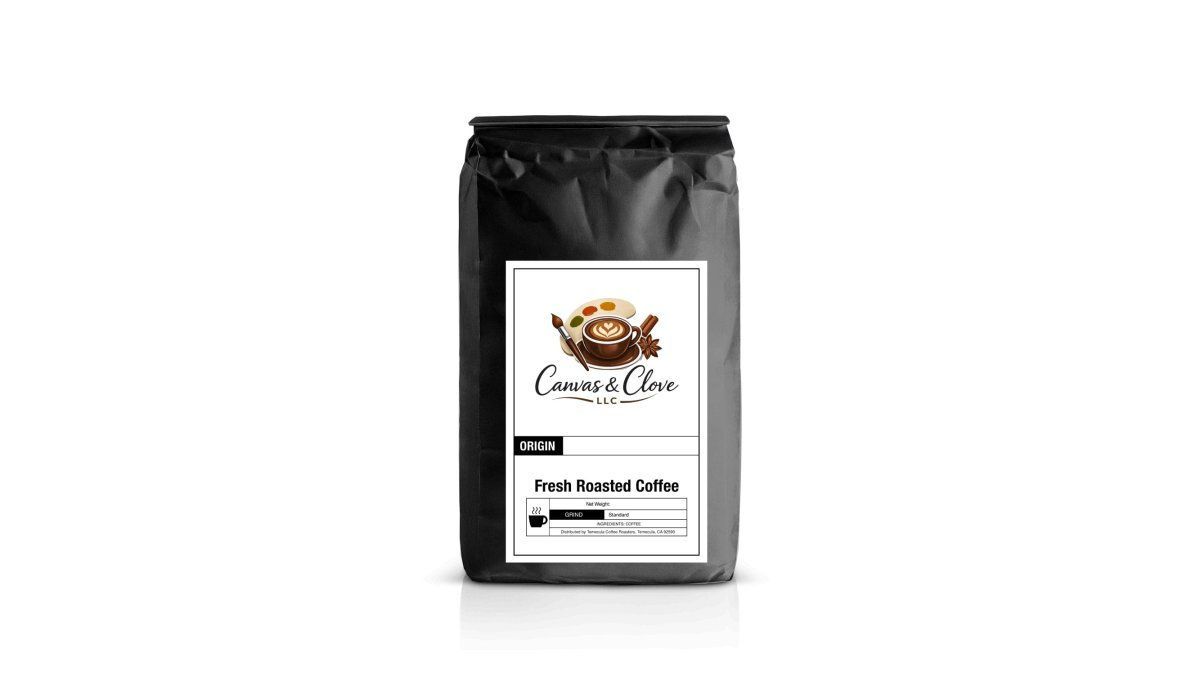
Our House Blend ($23.99) combines select coffees from Central and South America into a consistent, reliable everyday coffee. It's medium roast with nutty, sweet chocolate, mild citrus, and a clean bright finish. The blend uses both natural and washed processing methods, creating balance.
What sets Canvas and Clove apart is our commitment to precision roasting. We highlight warm, earthy notes that transform every cup into a masterpiece of flavor.
Every Canvas and Clove coffee is whole bean, roasted fresh, and labeled with roast dates so you know exactly when it was prepared. We source from cooperatives and smallholder farmers who prioritize quality over volume.
Choosing the best coffee beans for home brewing comes down to understanding what you value: exploration and complexity, or consistency and reliability. Canvas and Clove LLC's carefully sourced single-origin and blended coffees deliver both.
Frequently Asked Questions
What are the best coffee beans for home brewing if I'm not a coffee expert?
Start with a medium roast blend like the House Blend, which offers consistent flavor and approachability. Medium roasts balance sweetness, acidity, and body without being too intense. Single-origin beans work too; Ethiopia Natural provides fruity, caramel notes that appeal to casual drinkers. All Canvas and Clove beans are roasted fresh and priced at $23.99, making them accessible for everyday brewing without sacrificing quality.
How fresh should coffee beans be for home brewing, and how long do they stay fresh?
Freshness matters significantly. Coffee beans are best within 2-4 weeks of the roast date; this window captures peak flavor and aroma. Check the roast date on your bag before purchasing. Once opened, store beans in an airtight container away from light, heat, and moisture. Properly stored beans remain flavorful for 2-3 weeks. Whole beans last longer than ground coffee, which loses freshness within days of grinding.
Which roast level is best for my brewing method?
Light roasts (like Ethiopia Natural) suit pour-over and specialty methods that highlight origin flavors and acidity. Medium roasts (Guatemala, Colombia, Costa Rica) work well for drip coffee makers and French press, offering balance and clarity. Dark roasts (Bali Blue) shine in espresso and strong brews where body and richness dominate. Your brewing method and taste preference should guide your choice.
How do I choose coffee beans if I'm trying multiple brewing methods?
Start by identifying your primary brewing method. For drip coffee makers, medium roasts like Brazil Santos deliver smooth, cocoa-forward cups. For pour-over, medium to light roasts like Kenya showcase bright acidity and complexity. If you brew multiple ways, a versatile medium roast blend covers all bases. Canvas and Clove's House Blend is designed for consistency across brewing methods, making it ideal for experimenting.
What's the difference between washed, natural, and wet-hulled processing?
Processing method shapes flavor. Washed coffees (like Guatemala) taste cleaner with bright acidity. Natural-processed beans (Ethiopia Natural) develop fruity, sweet notes. Wet-hulled coffees (Bali Blue, Sumatra) produce earthy, full-bodied cups with lower acidity. Each method reflects the grower's tradition and the coffee's origin. Trying beans from different processing styles helps you discover your preference.