

Best Loose Leaf Tea for Beginners: 8 Easy Picks to Try
Last Updated: October 23, 2026
Quick Summary
The best loose leaf tea for beginners is English Breakfast, because black tea is the most forgiving category and stands up to milk, sugar, and small timing errors. Moroccan Mint and Hojicha are close seconds for anyone who prefers green tea or a lighter cup.
- Every tea in the catalog is a 3 oz loose leaf pouch at $22.99, so you choose flavor, not price tiers.
- Three ounces of loose leaf is roughly 30 to 40 cups at one teaspoon per cup.
- A basket infuser that fits a mug costs less than a single pouch and handles every tea on the list.
- Black teas want water just off the boil, roughly 200-212°F, while green and roasted teas want 175-185°F.
- Use about one teaspoon of loose leaf tea per 12 ounces of water for most blends.
Table of Contents
- Why Loose Leaf Tea Beats Tea Bags for New Drinkers
- Quick Comparison: Best Tea for Beginners at a Glance
- 1. English Breakfast: The Most Forgiving First Cup
- 2. Moroccan Mint: Green Tea Without the Bitterness
- 3. Jasmine: Floral, Silky, and Built for Re-Steeping
- 4. Earl Grey: A Classic Bergamot Blend
- 5. Masala Chai: Bold Spice for Milk Drinkers
- 6. Hojicha: Toasted, Low-Astringency, and Gentle
- How to Brew Loose Leaf Tea: Temperatures and Steeping Times
- Frequently Asked Questions
Why Loose Leaf Tea Beats Tea Bags for New Drinkers
Most people start with a bag because it's familiar and hard to ruin, then taste a properly brewed loose leaf tea and realize the bag was hiding something.
At Canvas and Clove LLC, we build our tea selection around that idea: the leaf should do the work, not the packaging.
Below, we'll show you which teas to start with, how each tastes, and how to brew it without overthinking. The eight picks were chosen for one reason: they're hard to ruin.
Quick Comparison: Best Tea for Beginners at a Glance
The best loose leaf tea for beginners is a forgiving one: a tea that stays smooth even if you're a minute off on timing.
| Tea | Type | Flavor Profile | Caffeine | Best For | Cost per 12 oz Cup | Easiest Setup |
|---|---|---|---|---|---|---|
| English Breakfast | Black | Rustic, sweet, malty | Moderate to high | First cup, milk drinkers | About $0.64 | Basket infuser or teapot |
| Moroccan Mint | Green + mint | Smooth, refreshing, minty | Low to moderate | Iced tea, afternoon sip | About $0.77 | Basket infuser |
| Jasmine | Green | Sweet, floral, fruity | Low to moderate | Re-steeping, slow mornings | About $0.64 (less with re-steeps) | Basket infuser or gaiwan-style cup |
| Earl Grey | Black | Citrus, floral, malt | Moderate to high | Classic citrus fans | About $0.64 | Basket infuser or teapot |
| Masala Chai | Black + spice | Bold, spicy, aromatic | Moderate to high | Latte-style chai | About $0.64 | Saucepan or teapot for milk brewing |
| Hojicha | Roasted green | Toasted cereal, umami | Low | Evening, low bitterness | About $0.77 | Basket infuser |
| Peach Paradise | Herbal | Peach, cranberry, rose | None | Caffeine-free sipping | About $0.51 | Basket infuser or French press |
| Apple Cider Rooibos | Herbal | Sweet, spicy, warming | None | Caffeine-free evenings | About $0.51 | Basket infuser or French press |
Every tea in our catalog is a 3 oz loose leaf pouch at $22.99, so you're choosing flavor, not price tiers.
Three ounces of loose leaf looks small next to a box of tea bags, but it's roughly 30 to 40 cups at one teaspoon per cup, the same per-cup range as a mid-priced box of bagged tea, with more control over strength. To test before committing, buy one pouch rather than a starter set; a single 3 oz pouch is enough to learn a tea's brewing window.
Equipment is where beginners overspend. You don't need a dedicated tea station: a basket infuser that fits a mug costs less than a single pouch and handles every tea on this list.
Caffeine is the last column worth checking before you buy. Black teas and masala chai carry moderate to high caffeine, green teas carry less, and the two herbal blends carry none because they contain no true tea leaf. If you're sensitive to caffeine or brewing for the evening, start with hojicha, peach paradise, or apple cider rooibos and save the black teas for mornings.
1. English Breakfast: The Most Forgiving First Cup
If you buy one tea first, buy this one. English Breakfast is a blend of African and Indian black teas that brews a rustic, sweet cup with enough strength to stand up to milk and sugar.
Our English Breakfast is the tea we'd hand someone who says, "I don't really know what I like yet." Drink it plain to taste the malt, or add milk and sugar and it still holds its character. It's also the easiest bridge from coffee: same morning slot, similar robustness, gentler finish.

2. Moroccan Mint: Green Tea Without the Bitterness
Green tea is where beginners usually get burned, literally. Brew it with boiling water and it goes bitter and grassy in a way that makes people give up on green tea entirely. Moroccan Mint sidesteps that because the mint carries the cup.
Our Moroccan Mint works hot as a comforting cup or poured over ice, making it a strong warm-weather pick. Green tea also carries less caffeine than black, so it suits an afternoon cup without the jittery edge.

3. Jasmine: Floral, Silky, and Built for Re-Steeping
Jasmine green tea is the pick for anyone who wants a cup that feels like a small ritual rather than a caffeine delivery system. Our Jasmine pairs hand-picked green tea with freshly plucked jasmine blossoms, giving a sweet, floral, fruity cup that's medium-bodied, smooth, and silky.
Here's the practical advantage beginners rarely hear about: this tea is built for multiple steepings. Brew the same leaves two or three times and each round tastes a little different.
4. Earl Grey: A Classic Bergamot Blend
Earl Grey is the tea for people who want a little citrus lift in their morning cup. Our Earl Grey blends Ceylon black tea, blue cornflowers, and bergamot essential oil, with orange, floral, and malt notes.

What most guides miss is that Earl Grey is a black tea first and a flavor second. If you already like English Breakfast, Earl Grey is the natural next step: same forgiving brewing window, different flavor.
5. Masala Chai: Bold Spice for Milk Drinkers
If you take your coffee with milk, start your tea the same way. Our Masala Chai is full-bodied, aromatic, and intensely spicy. Brew it strong, add milk and sugar, and you get a traditional-style chai that feels closer to a latte than a delicate afternoon tea.
This is the boldest tea on our list, and that's the point. Beginners who find plain black tea boring tend to love chai because the spice blend does the heavy lifting.
6. Hojicha: Toasted, Low-Astringency, and Gentle
Hojicha is roasted green tea, and roasting changes everything. Our Hojicha delivers comforting toasted-cereal notes with balanced umami. The roast tames the astringency that turns people off green tea, so the cup lands smooth and mellow rather than sharp.
This is the tea we'd recommend for an evening cup or for anyone who's been told green tea is "too grassy." It's also the most forgiving green tea to brew: the toasted flavor masks small timing errors that would ruin a delicate Sencha.
How to Brew Loose Leaf Tea: Temperatures and Steeping Times
Brewing loose leaf tea comes down to four variables: water temperature, steeping time, tea-to-water ratio, and leaf quality. Get the first three roughly right and almost any tea turns out drinkable. The reference below puts them side by side so you can brew any tea on this list without flipping between paragraphs.
The brewing reference, side by side:
| Tea | Water Temperature | Steep Time | Quick Note |
|---|---|---|---|
| English Breakfast | 200-212°F (just off boil) | 3-5 minutes | Stays smooth with milk; pull leaves at 5 minutes |
| Moroccan Mint | 175-185°F | 2-3 minutes | Mint masks small timing errors |
| Jasmine | 175-185°F | 2-3 minutes | Re-steep 2-3 times; add 30 seconds each round |
| Earl Grey | 195°F | 5-10 minutes | Dense leaf; weigh if you want consistency |
| Masala Chai | 200-212°F | 4-5 minutes | Brew strong, then add milk |
| Hojicha | 175-185°F | 2-3 minutes | Roast hides oversteeping better than most greens |
| Peach Paradise (herbal) | 212°F | 5-10 minutes | No true tea leaf; full boil is fine |
| Apple Cider Rooibos (herbal) | 212°F | 5-10 minutes | Sweet spice; good for evening |
A few rules of thumb make this easier to remember. Black teas want water just off the boil, roughly 200-212°F. Green and roasted teas want water cooled two to three minutes after boiling, near 175-185°F.
On quantity, a teaspoon works for most blends, but density matters: a teaspoon of fluffy jasmine weighs less than a teaspoon of dense Earl Grey, which is why the table gives both a spoon measure and a gram target where the two diverge. A kitchen scale removes the guesswork for about the price of a box of tea bags, but it's optional. Start with one teaspoon per 12 ounces, taste, and adjust by leaf amount before adjusting by time.
Steeping time is the variable beginners most often get wrong in the same direction: too long.
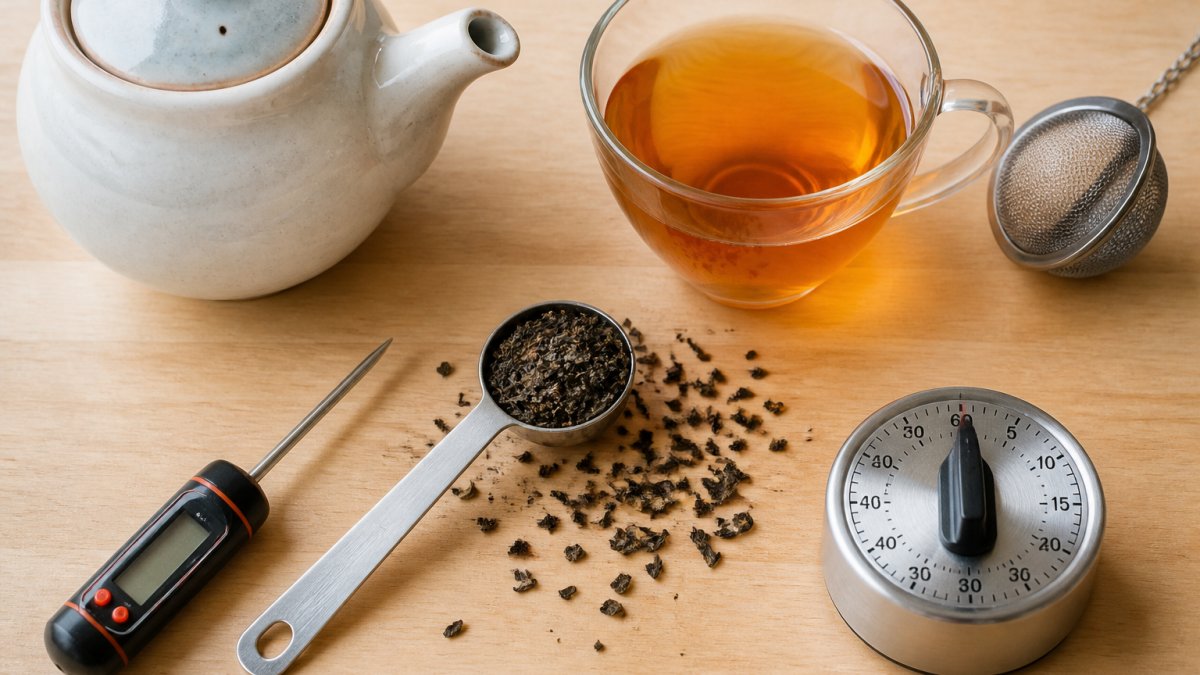
As for gear, you don't need much: a loose leaf tea infuser or a simple tea strainer and a teapot will cover every tea on this list. A thermometer is useful but optional once you learn how long to let the kettle rest.
Frequently Asked Questions
What is the best tea to start with for a beginner?
Start with a forgiving black or green blend that tolerates small brewing mistakes. English Breakfast is the safest first pick because its rustic, sweet profile stands up to milk and sugar, and it does not turn harsh if you steep it a minute too long. Moroccan Mint is a good second step if you want to try green tea, since the mint softens any bitterness. Buy one 3oz tin, brew it three or four times, and only then add a second variety.
How much loose leaf tea should I use per cup?
Most blends call for about 2.5g to 3g of leaf per 12oz of water. That is roughly one level teaspoon for finely cut black tea and closer to two teaspoons for whole-leaf oolong or large herbal pieces. Earl Grey uses 2.5g per 12oz at 195°F, and Hibiscus Berry Tea uses 3g per 12oz at 212°F. A small kitchen scale removes the guesswork entirely.
What equipment do beginners need to brew loose leaf tea?
You need three things: a way to heat water, a vessel to steep in, and a way to strain the leaves. A simple basket infuser that fits your mug covers the last two for under $15. A thermometer helps more than an expensive teapot, because water temperature decides whether green tea tastes sweet or bitter. Skip the scale at first if you want, but a teaspoon measure and a timer will get you a good cup from day one.
How should I store loose leaf tea to keep it fresh?
Keep tea in an airtight container away from light, heat, and moisture, and store it away from coffee or spices because tea leaves absorb surrounding odors. A sealed container in a dark cupboard works well. Black and oolong teas hold their flavor for roughly 12 to 18 months, green and white teas are best within 6 to 12 months, and herbal blends stay good for about a year. Buy quantities you will drink within a few months while you are learning so nothing goes stale before you finish it.
Which loose leaf teas are easiest to brew?
Herbal blends and robust black teas are the most forgiving. Apple Cider Rooibos and Hibiscus Berry Tea are naturally caffeine-free and steep at 212°F for 5 to 10 minutes, so there is very little that can go wrong. English Breakfast and Masala Chai also handle longer steeping without turning bitter. Green teas like Jasmine and Moroccan Mint need cooler water, around 175°F to 195°F, so they demand a bit more attention at the start.
