

Hibiscus Berry Tea: A Complete 2026 Guide to Brewing
Table of Contents
- Why Hibiscus Berry Tea Deserves a Place in Your Ritual
- Flavor Profile, Ingredients, and What Sets Premium Blends Apart
- Hibiscus Tea Brewing Temperature and How to Brew Loose Leaf Hibiscus Tea
- Caffeine-Free Herbal Tea Blends: What Else to Mix In
- Health Benefits of Hibiscus vs. Berries: What Each Brings
- DIY Blending Ratios and Pairing Guide for Hibiscus Berry Tea
- Sourcing, Storage, and Shelf Life: Keeping Botanicals Fresh
- Frequently Asked Questions
Last Updated: September 28, 2026
Why Hibiscus Berry Tea Deserves a Place in Your Ritual
Hibiscus berry tea is a caffeine-free botanical infusion that combines dried hibiscus petals with berries and complementary botanicals, producing a tart, ruby-red cup that works equally well hot or over ice. It is the most forgiving blend in a tea cabinet: it rewards a hurried five-minute steep as readily as a slow weekend pour. Below, we'll show you exactly how to brew it, blend it, and store it so every cup tastes intentional.
Flavor Profile, Ingredients, and What Sets Premium Blends Apart
Hibiscus berry tea tastes predominantly tart and tangy, with cranberry-like acidity up front and a softer, naturally sweet finish contributed by dried fruit. A well-built blend reads as layered rather than simply sour: floral notes from the hibiscus, jammy depth from berries, and a faint citrus lift on the back end.
Reading the Ingredient List: Rosehip, Elderberry, and Dried Fruit
A short ingredient list usually signals a better blend. Here is what each common component actually contributes.
- Rosehip: bright, slightly tart, and high in vitamin C; adds body without sweetness
- Elderberry: deep purple color and a wine-like, faintly musky berry essence
- Strawberry and blackberry pieces: natural sweetness and aroma; strawberry reads lighter, blackberry darker
- Orange peel or lemongrass: citrus notes that sharpen the finish
- Licorice root or stevia leaf: natural sweetness without sugar, though licorice can dominate if overused
Hibiscus Tea Brewing Temperature and How to Brew Loose Leaf Hibiscus Tea
The ideal hibiscus tea brewing temperature is 200-212°F, essentially just off a rolling boil. Unlike green tea, which scorches and turns bitter above roughly 175°F, hibiscus needs aggressive heat to extract color, acidity, and body from thick dried calyxes. Cooler water produces a pale, thin cup that tastes like disappointment.
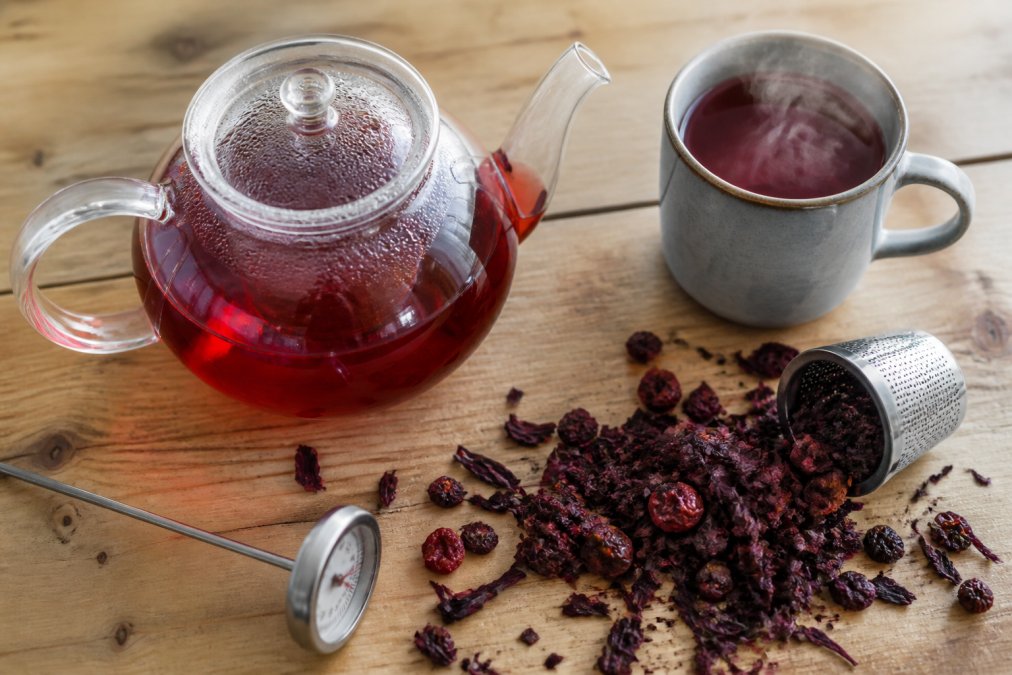
The process itself takes four steps:
- Bring fresh, filtered water to a boil, then let it rest for 30 seconds
- Add loose-leaf hibiscus berry tea to an infuser or strainer
- Pour the water over the leaves and cover the cup
- Steep 5-7 minutes, then remove the infuser
Hot Brew vs. Iced Tea: Steeping Times and Ratios
Cold preparation is where hibiscus berry tea genuinely outperforms most herbal blends. Because there are no tea leaves to turn bitter, you can steep it strong and pour it over ice without the flavor collapsing.
| Method | Water Temperature | Steep Duration | Ratio (per 8 oz) | Best For |
|---|---|---|---|---|
| Hot brew | 200-212°F | 5-7 minutes | 1 tsp loose-leaf | Evening wind-down |
| Iced, hot-brewed | 200-212°F | 8-10 minutes | 1.5 tsp loose-leaf | Same-day pitchers |
| Cold infusion | Room temperature or chilled | 8-12 hours | 2 tsp loose-leaf | Smooth, low-acid batches |
| Concentrate | 200-212°F | 12 minutes | 3 tsp loose-leaf | Dilute 1:2 over ice |
Caffeine-Free Herbal Tea Blends: What Else to Mix In
Caffeine-free herbal tea blends built on hibiscus share one useful property: they accept nearly any addition without losing their identity. A 30% addition of something else still leaves the cup recognizably tart and red.
Health Benefits of Hibiscus vs. Berries: What Each Brings
Most pages on this topic stop at "hibiscus is tart, berries are sweet." That misses the point. Hibiscus and berries contribute chemically distinct compounds, and understanding which does what is the difference between drinking a pleasant red cup and drinking a cup you chose on purpose.
What Hibiscus Calyx Actually Contributes
The deep red color of hibiscus comes from anthocyanins, the same pigment family found in blueberries and red cabbage. Hibiscus calyx is also a source of organic acids, primarily citric acid, malic acid, and hibiscus acid, which produce the sharp, cranberry-like bite. These acids are why the infusion tastes the way it does and why it reads as "cleansing" to many drinkers.
What Berries Add That Hibiscus Cannot
Berries bring a different polyphenol profile. Strawberries and blackberries contribute ellagic acid and various flavonols. Elderberries are notably rich in anthocyanins of their own, which is why elderberry syrups are so dark. Rosehip, technically the fruit of the rose plant, is a well-known source of vitamin C and also contains carotenoids.
The Honest Caveats
Hibiscus is genuinely acidic. People who are sensitive to acidic drinks, who have reflux, or who take diuretic or blood-pressure medications should talk to a healthcare provider before making it a daily habit. Hibiscus can interact with some medications, and this is a beverage, not a treatment. Berries are generally well tolerated, but anyone managing blood sugar should note that whole dried fruit contributes natural sugars to the infusion.
DIY Blending Ratios and Pairing Guide for Hibiscus Berry Tea
A reliable starting ratio for homemade blends is 50% hibiscus, 25% rosehip, 15% dried berry pieces, and 10% accent ingredients. That produces a balanced, tart cup with visible depth. Adjust from there: push hibiscus to 60% for a sharper brew, or drop it to 40% and raise the berries for something sweeter.
- With food: shortbread, almond biscotti, cheesecake, and anything with cream or butter
- With spice: cinnamon, cardamom, and black pepper all flatter the acidity
- With citrus: orange and grapefruit peel amplify the tartness; lemon softens it
- With spirits: gin and light rum both work in a hibiscus berry spritz
Sourcing, Storage, and Shelf Life: Keeping Botanicals Fresh
Dried botanicals fade faster than most people assume, and the difference between a vibrant cup and a dusty one is usually storage, not the blend itself. Heat, light, moisture, and air are the four enemies, and a clear jar on an open shelf exposes your tea to three of them at once.
How Long Hibiscus Berry Tea Actually Lasts
A common pattern among tea retailers is to print a "best by" date 18 to 24 months from packaging, but that assumes the bag stays sealed. Once opened, quality declines faster. Most blends hold their peak character for about 6 to 12 months after opening when stored properly. After that, the color dulls, the aroma flattens, and the cup tastes like a weaker version of itself.
Choosing the Right Container
Opaque, airtight, and out of the light is the rule. In practice, that means:
- Tins with double lids are the standard for a reason. The inner lid seals, the outer lid blocks light.
- Mylar or foil-lined pouches with a zip seal work well for bulk storage, especially if you press out excess air before sealing.
- Glass jars are fine only if stored inside a closed cabinet. On an open shelf, they fail the light test.
- Plastic bags are the worst option. They are permeable to odors and do not seal reliably.
Buying in Quantities You Will Finish
A quarter-pound of loose-leaf is a reasonable amount for a household drinking a cup or two a day, and it will stay vibrant far longer than a bulk bag opened once and forgotten. If you drink less, buy smaller. If you drink more, buy a pound and split it into two containers so you are only opening one at a time.
Sourcing: The Questions That Actually Matter
On sourcing, the useful question is not "is it organic" but "can I trace it." A supplier who names the region and the harvest year is telling you something a certification logo alone does not. Organic certification matters most for ingredients you consume whole, and less for a strained infusion, but transparency about origin is a fair proxy for how carefully a blend was assembled.
- Where was the hibiscus grown? Hibiscus sabdariffa is cultivated widely in West Africa, Central America, and parts of Asia. Origin affects flavor and, often, labor practices.
- What is the harvest year? Botanicals are agricultural products. A 2024 harvest is not the same as a 2021 harvest sitting in a warehouse.
- Is the fruit whole or pieces? Whole fruit is harder to adulterate and easier to verify.
- Are flavorings used? If the ingredient list says "natural flavors" and nothing else, you are buying hibiscus with a scent, not a fruit blend.
Frequently Asked Questions
What is hibiscus berry tea good for?
Hibiscus berry tea is naturally caffeine-free and rich in antioxidants from hibiscus, rosehip, and elderberry. It supports hydration and provides a tart, refreshing alternative to sugary drinks. The berries add natural sweetness and additional vitamin C. Many people drink it as a warm evening ritual or over ice in summer. Because it contains no caffeine, it will not interfere with sleep.
Does hibiscus berry tea contain caffeine?
No. Hibiscus berry tea is a caffeine-free herbal tea blend, also called a tisane. It is made from dried botanicals, dried fruit, and flowers rather than Camellia sinensis leaves. This makes it suitable for any time of day, including late evening. If you are sensitive to caffeine or avoiding it for health reasons, this is a safe choice. Always check labels on blended products to confirm no caffeinated ingredients were added.
How should you brew hibiscus berry tea for the best flavor?
Use water at 200-212°F (just off boiling) and steep 1 teaspoon of loose-leaf blend per 8 ounces for 5-7 minutes. The hibiscus tea brewing temperature matters: cooler water under-extracts the tart, tangy notes, while boiling water draws out full color and flavor. For iced tea, double the amount and steep 10 minutes, then pour over ice. Adjust steeping time to your taste, but avoid going past 10 minutes or it may become bitter.
What to avoid when drinking hibiscus tea?
Hibiscus tea can lower blood pressure, so if you take hypertension medication or have low blood pressure, talk to your doctor before drinking it daily. It may also interact with diuretics and some other drugs. Avoid adding large amounts of sugar or artificial sweeteners, which cancel out the health benefits. If you are pregnant or breastfeeding, limit intake and consult your healthcare provider. Always read ingredient lists to avoid unwanted additives.