

How to Brew Earthy Coffee Notes: A Step-by-Step Guide
Table of Contents
- Understanding Earthy Flavor Profiles in Coffee
- The Role of Bean Origin and Processing in Earthy Notes
- Impact of Water Temperature on Coffee Flavor
- How to Adjust Grind Size for Flavor Profile
- Best Coffee Brewing Methods for Full Body
- Mastering Extraction Ratios and Brew Timing
- Troubleshooting Unwanted Earthiness and Over-Extraction
- Frequently Asked Questions
Last Updated: October 2, 2026
Understanding Earthy Flavor Profiles in Coffee
Earthy flavor notes come from growing conditions, processing methods, roasting, and brewing. When you brew earthy coffee notes, you extract compounds creating deep, grounding flavors reminiscent of soil, wood, and minerals.
Canvas and Clove LLC sources single-origin and blended coffees selected for rich, earthy character, with precision roasting that highlights natural flavor compounds.
What Makes a Coffee Taste Earthy
Earthy coffee tastes like soil, minerals, leather, or dark wood. Key factors include altitude and volcanic soil (deeper profiles), natural processing (earthier notes), dark roasting (grounded flavors), and bean age (woody characteristics). Earthy is a desirable flavor profile when balanced with sweetness or body.
Earthy vs. Woody vs. Nutty: Identifying the Difference
Earthy tastes like soil or minerals (grounding, deep). Woody tastes like cedar or oak (sharper, astringent). Nutty tastes like almonds or cocoa (warmer, sweeter). When you brew earthy coffee notes, preserve grounding quality while avoiding woody harshness through extraction and brewing method control.
The Role of Bean Origin and Processing in Earthy Notes
Beans from volcanic regions like Sumatra develop deeper, earthier profiles. Canvas and Clove LLC's Sumatra offers dark chocolate, dried fruit, and distinct earthy character via wet-hulling processing. Processing methods differ: washed (cleaner, less earthy), natural (fruitier, heavier body), wet-hulling (deep earthiness, syrupy). Origin provides the earthy foundation; brewing method determines extraction.

Impact of Water Temperature on Coffee Flavor
Water temperature and chemistry both control flavor extraction when you brew earthy coffee notes. Temperature affects extraction speed; mineral content amplifies or masks grounding flavors.
Temperature and Extraction Speed
Temperature affects extraction: above 205°F over-extracts bitterness; below 195°F under-extracts sourness. For earthy coffees, aim for 200-203°F to extract deep, mineral-forward notes without over-extraction.
Water Chemistry: Mineral Content and Earthy Notes
Water hardness (measured in ppm of dissolved minerals) directly influences earthy note clarity. Mineral composition separates muddy cups from clear, articulate earthiness.
Magnesium (8-12 ppm ideal) enhances earthy, mineral, and woody notes, sharpening clarity. Calcium (40-60 ppm ideal) buffers acidity and softens earthy notes, reducing intensity but adding balance.
Soft water (0-60 ppm) extracts aggressively; use 198-200°F to avoid harshness. Medium hardness (60-120 ppm) is ideal; use 200-203°F. Hard water (120+ ppm) slows extraction; use 202-205°F for full earthy extraction.
Testing and Adjusting Your Water
If earthy coffees taste flat, muddy, or sharp, test water hardness with a TDS meter ($15-30). Match temperature to hardness: soft water needs cooler brewing, hard water needs warmer. Use filtered water if above 150 ppm; avoid distilled water.
How to Adjust Grind Size for Flavor Profile
Grind size controls extraction speed: finer grinds extract faster, coarser grinds slower. When you brew earthy coffee notes, grind size determines which flavor compounds reach your cup.
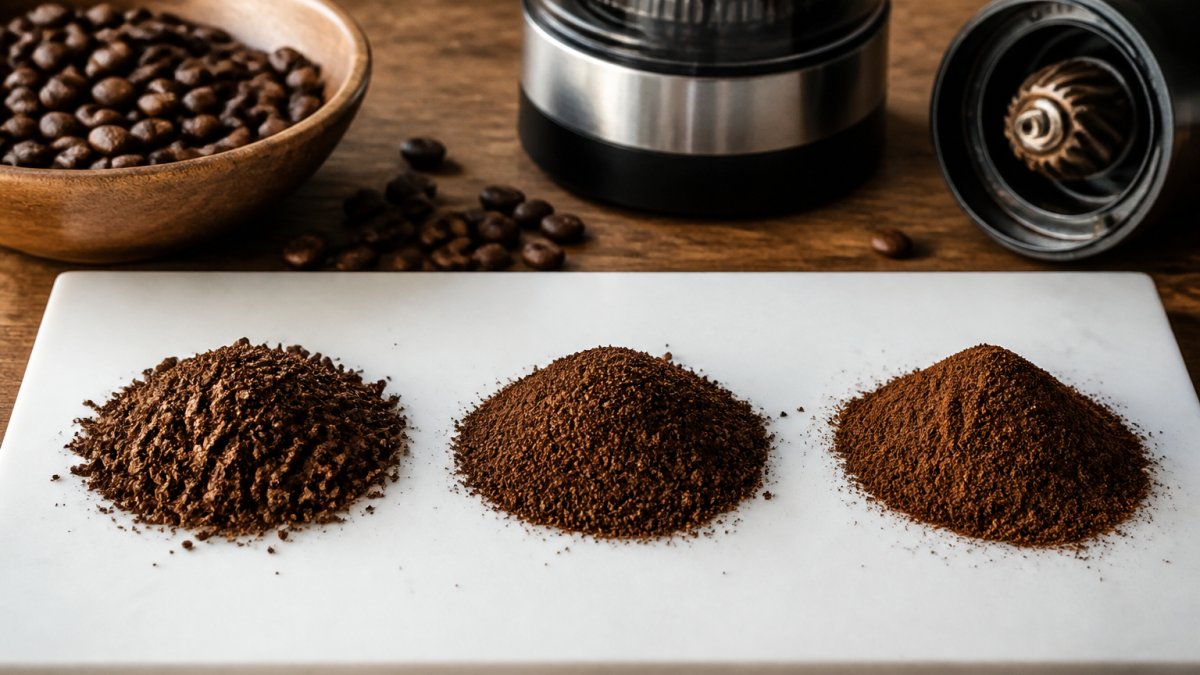
Grind size guide for earthy coffees:
| Brewing Method | Grind Size | Extraction Time | Best For |
|---|---|---|---|
| French Press | Coarse | 4 minutes | Heavy body, full earthiness |
| Pour-Over | Medium | 2.5-3 minutes | Balanced earthiness, clarity |
| Espresso | Fine | 25-30 seconds | Concentrated earthy notes |
| AeroPress | Medium-Fine | 1-2 minutes | Smooth earthiness, less bitterness |
If earthy coffee tastes muddy, grind coarser; if sour, grind finer. Small adjustments create noticeable differences. For earthy profiles, balance contact time to extract deep notes without over-extracting bitterness.
Best Coffee Brewing Methods for Full Body
Full body and earthy character go hand in hand. Methods maximizing contact time deliver heaviest body and most pronounced earthiness.
Immersion Brewing for Maximum Earthiness
Immersion brewing maximizes extraction of deep flavor compounds. French Press: heat water to 200-203°F, add coarsely ground coffee (1:16 ratio), steep 4 minutes, press slowly. Metal filter leaves oils, enhancing earthy notes. Cold brew: steep coarse grounds 12-24 hours in cold water for smooth, low-acidity earthiness. Canvas and Clove LLC's Kopi Safari blend works beautifully with immersion methods.

Pour-Over Techniques for Flavor Clarity
Pour-over methods use gravity to pull water through grounds. They offer more control than immersion and produce cleaner cups with better flavor clarity.
Pour-over brewing steps:
- Heat water to 200°F
- Use medium grind (1:16 ratio)
- Wet grounds with small amount of water, wait 30 seconds (bloom)
- Pour slowly in circular motions over 2.5-3 minutes
- Let water drip through completely
Pour-over extracts earthy notes while filtering out oils that can muddy the flavor.
The bloom step is critical. Letting grounds contact water for 30 seconds before full pour allows CO2 to escape.
Mastering Extraction Ratios and Brew Timing
Extraction ratio, the weight of coffee to water, is the single most important variable for consistency when you brew earthy coffee notes. But ratio alone doesn't tell the full story. The interaction between ratio, grind size, water temperature, and brew time determines which flavor compounds end up in your cup. Understanding this mechanism lets you intentionally pull out earthy notes or suppress them.
The Extraction Ratio Foundation
Extraction ratio is expressed as coffee weight to water weight:
- 1:14 (1g coffee to 14g water): Stronger, more concentrated earthy notes. Pulls more total dissolved solids (TDS) into the cup. Best for when you want bold, pronounced earthiness.
- 1:16 (1g coffee to 16g water): Balanced, standard strength. The baseline for most specialty coffee. Extracts earthy notes with good clarity without over-concentration.
- 1:18 (1g coffee to 18g water): Lighter, more delicate earthy character. Lower TDS means more subtle, nuanced grounding flavors. Best for when you want to taste earthy notes alongside other flavor complexity.
Most specialty coffee uses 1:16 as the baseline. From there, adjust based on your taste preference and the specific coffee:
- Prefer heavier earthiness? Move to 1:14
- Want more clarity and balance? Try 1:18
The Extraction Percentage Mechanism
What actually matters is extraction percentage, the amount of soluble material pulled from the grounds. For coffee, the target extraction range is 18-22%, with 20% considered optimal for balanced flavor.
Here's how ratio, grind, temperature, and time interact to hit that target:
Finer grind + shorter time + higher ratio (more water) = same extraction as coarser grind + longer time + lower ratio (less water)
This is why you can achieve similar flavor profiles through different brewing methods:
- French Press (coarse, 4 min, 1:16): ~20% extraction. Full body, pronounced earthiness, oils in cup.
- Pour-Over (medium, 2.5-3 min, 1:16): ~20% extraction. Cleaner cup, same earthy clarity, less body.
- Espresso (fine, 25-30 sec, 1:2): ~20% extraction. Concentrated earthy notes, high intensity, small volume.
All three hit roughly 20% extraction but deliver different sensory experiences because of body and mouthfeel differences.
The Earthy-Notes-Specific Recipe
To intentionally maximize earthy character while avoiding over-extraction bitterness, use this framework:
For Full-Bodied Earthiness (French Press or Immersion):
- Ratio: 1:15
- Grind: Coarse (like breadcrumbs)
- Water temp: 200-202°F
- Brew time: 4 minutes
- Expected result: Heavy body, pronounced soil and mineral notes, slight sweetness
For Balanced Earthy Clarity (Pour-Over or Drip):
- Ratio: 1:16
- Grind: Medium (like sea salt)
- Water temp: 200-203°F
- Brew time: 2.5-3 minutes
- Expected result: Clear earthy character, good body, articulate tasting notes
For Delicate Earthy Nuance (Pour-Over or AeroPress):
- Ratio: 1:17
- Grind: Medium-fine (like sand)
- Water temp: 198-200°F
- Brew time: 2-2.5 minutes
- Expected result: Subtle earthiness, more complexity, lighter body
Adjusting One Variable at a Time
Brew timing works with ratio. A longer brew time with a coarser grind (4 minutes in French Press) extracts similar amounts as a shorter brew time with finer grind (2.5 minutes in pour-over). But when you want to dial in earthy notes, change only one variable per brew:
If your cup tastes flat or muted:
- First adjustment: Increase ratio to 1:15 (more coffee, more extraction)
- Second adjustment: Raise water temp by 2°F
- Third adjustment: Fine grind by one setting
If your cup tastes harsh or bitter:
- First adjustment: Decrease ratio to 1:17 (less coffee, less extraction)
- Second adjustment: Lower water temp by 2°F
- Third adjustment: Coarsen grind by one setting
Tracking Parameters for Consistency
Write down every brew:
- Ratio (e.g., 1:16)
- Grind size (coarse/medium/fine)
- Water temperature (exact number)
- Brew time (in seconds)
- Tasting notes (earthy intensity, body, clarity, any off-flavors)
After 5-10 brews, patterns emerge. You'll see which combination of variables produces the earthy profile you prefer. This data becomes your personal brewing baseline.
Troubleshooting Unwanted Earthiness and Over-Extraction
Sometimes earthy notes cross into unpleasant territory. Over-extraction creates harsh, burnt, or muddy flavors that mask the subtle grounding character you want.
Signs of over-extraction:
- Bitter, burnt taste
- Harsh mouthfeel
- Muddy, unclear flavors
- Lingering bitterness that doesn't fade
Fixes for over-extraction:
- Lower water temperature by 2-3°F
- Use coarser grind
- Shorten brew time by 15-30 seconds
- Reduce coffee-to-water ratio slightly (move from 1:16 to 1:17)
Signs of under-extraction:
- Sour, acidic taste
- Thin body
- Flat, muted earthy notes
- Sharp, unpleasant aftertaste
Fixes for under-extraction:
- Raise water temperature by 2-3°F
- Use finer grind
- Extend brew time by 15-30 seconds
- Increase coffee-to-water ratio (move from 1:16 to 1:15)
If you're using quality beans like Canvas and Clove LLC's carefully sourced coffees, the problem is almost always brewing technique, not the coffee itself. Our blends are roasted to highlight earthy character while maintaining balance.
Brewing earthy coffee notes requires attention to detail, but the payoff is a cup that feels grounding and complete. Start with quality beans, Canvas and Clove LLC's Sumatra and Asian Plateau Blend are specifically selected for their earthy character and precision-roasted to highlight those warm, mineral-forward notes. Master one brewing variable at a time, track your results, and you'll develop the skill to consistently extract the deep, satisfying earthiness that transforms your daily coffee ritual into a moment of mindful presence.

Frequently Asked Questions
What does earthy mean in coffee tasting?
Earthy coffee notes taste like soil, wood, or mineral-rich elements, think of wet earth after rain or forest floor. These flavors come from the bean's origin, altitude, processing method, and how you brew it. Earthy coffees often have a grounding quality with low acidity and syrupy body, making them feel substantial and comforting rather than bright or fruity.
How does water temperature influence the taste of earthy coffee?
Water temperature controls extraction speed and which flavor compounds dissolve into your cup. Hotter water (195-205°F) extracts more soluble compounds, bringing out deeper earthy and woody notes with fuller body. Cooler water (185-195°F) extracts more slowly, emphasizing clarity and reducing bitterness. For earthy profiles, aim for 200-203°F to unlock rich, grounding flavors without over-extraction.
Which coffee bean origins produce the strongest earthy flavors?
Southeast Asian coffees naturally emphasize earthy characteristics. Sumatran beans, processed using wet-hulling methods, develop heavy body, dark chocolate, and pronounced earthy notes. The Sumatra from Aceh region offers syrupy body with lingering earthiness. Asian Plateau blends combine multiple Southeast Asian origins for consistent herbal and grounding flavors. Higher altitude beans (1100-1600 meters) also develop deeper earthy complexity.
Can I adjust my brewing method if I'm getting too much earthiness?
Yes. If your coffee tastes overly earthy or muddy, you're likely over-extracting. Use cooler water (190-195°F), reduce brew time by 15-30 seconds, use a coarser grind, or switch to pour-over methods that offer more control. If earthiness is too subtle, increase water temperature to 203-205°F, grind finer, or extend brew time slightly. Start with small adjustments, even 5°F or 10 seconds changes flavor significantly.