

How to Brew Single Origin Coffee at Home
Table of Contents
- Understanding Your Single Origin Beans
- Best Coffee Beans for Home Brewing
- Coffee Grind Size Chart and Selection
- Water Temperature and Quality Fundamentals
- Pour Over Coffee Brewing Ratio and Technique
- How to Store Coffee Beans for Freshness
- Tasting and Evaluating Your Brew
- Frequently Asked Questions
Last Updated: October 4, 2026
Understanding Your Single Origin Beans
Single origin coffee comes from one specific region, farm, or even one harvest. This matters because it shapes flavor in ways blended coffees cannot match.
When you brew single origin coffee at home, you're tasting the terroir. That's the soil, altitude, climate, and processing method all combined. Each origin tells a story through its flavor profile.
At Canvas and Clove LLC, we source single origin beans specifically chosen for their distinct characteristics. Our coffees highlight the unique qualities that make each region special.
The key to unlocking these flavors is understanding what you're working with before you brew. Different origins need different approaches. A light roast Ethiopian bean requires different water temperature and brew time than a medium roast Guatemalan. Knowing your beans helps you brew better coffee.
Best Coffee Beans for Home Brewing
Not all single origin beans work equally well for home brewing. Some shine with pour-over methods. Others excel in French press. The best beans for your setup depend on your equipment and taste preferences.
Look for beans labeled with specific information: region, altitude, variety, and processing method. This detail tells you what to expect. Coffee Quality Institute standards outline how specialty coffees are evaluated for flavor clarity and consistency.
Canvas and Clove LLC offers several single origin options perfect for home brewing. Our Ethiopia Natural ($23.99) delivers milk chocolate, fruity, and caramel notes with a lighter roast that preserves the indigenous heirloom cultivars' complexity.

For those seeking bright acidity and floral notes, our Kenya ($23.99) brings orange, lemon, and effervescent qualities from the Othaya region.
Coffee Grind Size Chart and Selection
Grind size controls how water flows through your coffee. Get it wrong, and you'll either under-extract or over-extract your beans.
Coarse grind works for French press and cold brew. The large particles slow water flow. You need longer contact time to pull out flavors.
Medium grind suits pour-over and drip machines. This is your most versatile grind size. It balances extraction speed with flavor development.
Fine grind works for espresso and Moka pots. Small particles increase surface area. Water moves through quickly but contacts more coffee.
| Brew Method | Grind Size | Particle Feel | Brew Time |
|---|---|---|---|
| French Press | Coarse | Like breadcrumbs | 4 minutes |
| Pour Over | Medium | Like sand | 3-4 minutes |
| Espresso | Fine | Like powder | 25-30 seconds |
| Cold Brew | Coarse | Like breadcrumbs | 12-24 hours |
Use a burr grinder, not a blade grinder. Burr grinders produce consistent particle size. Blade grinders create uneven pieces that extract unevenly.
Grind just before brewing. Ground coffee loses flavor quickly as it oxidizes. Whole beans stay fresh much longer.
Water Temperature and Quality Fundamentals
Water temperature dramatically affects extraction. Too hot and you over-extract, pulling bitter compounds. Too cold and you under-extract, missing sweetness and body.
The ideal brewing temperature is 195-205 degrees Fahrenheit. This range works for most single origin coffees.
Water Chemistry and Mineral Content
Water quality matters far more than most home brewers realize, and it's one of the most overlooked variables in single origin brewing.
Total dissolved solids (TDS), measured in parts per million (ppm), quantify the minerals in your water. For single origin coffee, aim for water with 50-150 ppm of minerals.
Hard water (150+ ppm) contains high levels of calcium and magnesium. While these minerals help extraction, excessive hardness can mute the bright acidity and floral notes common in Ethiopian naturals or Kenyan coffees.
Soft water (below 50 ppm) lacks minerals needed for balanced extraction. Distilled water and reverse osmosis water fall into this category.
Neutral filtered water (50-150 ppm) is the sweet spot. Most pitcher filters and whole-home systems deliver water in this range.
pH and Flavor Extraction
Water pH (acidity level) also affects how coffee dissolves. Neutral to slightly alkaline water (pH 6.5-7.5) extracts single origin coffees most effectively. Water that's too acidic (below 6.5) under-extracts and tastes sour. Water that's too alkaline (above 8.0) over-extracts and tastes bitter.
If your tap water tastes chlorinated or off, use filtered water. Your coffee will taste noticeably cleaner, and the origin's true character will come through.
Adjusting Water for Different Origins
Different single origins respond to water chemistry differently. Light roast, high-altitude coffees (like Ethiopian naturals or Kenyan highlands) benefit from slightly softer water that emphasizes brightness and acidity. Medium roast, lower-altitude coffees (like Colombian or Guatemalan) perform better with slightly harder water that rounds out body and sweetness.
If your water is too hard, use a simple pitcher filter to reduce mineral content. If it's too soft, add a pinch of mineral water or use a water enhancer designed for coffee brewing. Small adjustments yield noticeable flavor differences in single origin cups.
The slurry (coffee and water mixture) should stay between 195-205°F throughout brewing. This maintains consistent extraction across all particles.
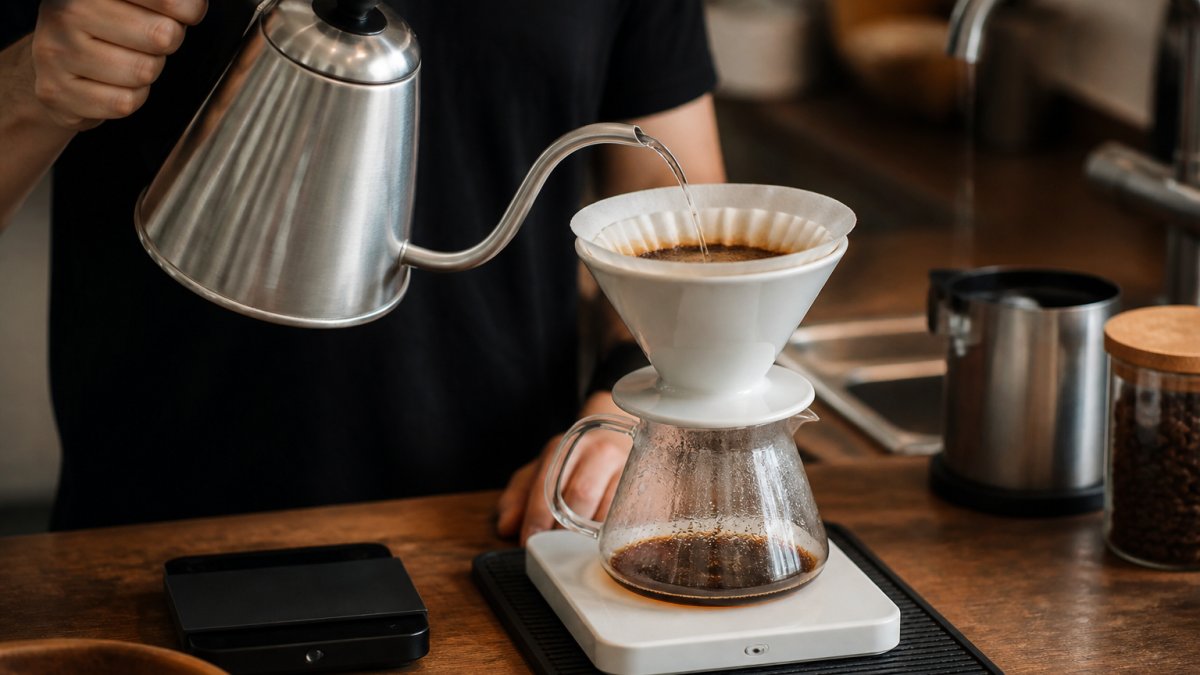
Pour Over Coffee Brewing Ratio and Technique
The brew ratio determines strength and flavor balance.
For stronger coffee, use 1:15. For lighter coffee, try 1:17.
Step 1: Measure your coffee Use a precision scale. Weigh your ground coffee to the nearest gram.
Step 2: Heat water to 195-205°F Use a gooseneck kettle if possible.
Step 3: Rinse your filter Pour hot water through the filter paper first.
Step 4: Add ground coffee and bloom Pour just enough water to saturate the grounds. Wait 30-45 seconds.
Step 5: Pour in stages Pour slowly in circular motions. Keep the water level consistent.
Step 6: Watch draw-down time The entire brew should take 3-4 minutes. If it's faster, your grind is too coarse.
The slurry (coffee and water mixture) should stay between 195-205°F throughout brewing. This maintains consistent extraction across all particles.
How to Store Coffee Beans for Freshness
Freshness determines flavor quality more than almost anything else. Stale coffee tastes flat and bitter.
Store beans in an airtight container away from light, heat, and moisture. A sealed glass jar works well. Avoid clear containers that let light in.
Keep your coffee at room temperature. Never refrigerate or freeze whole beans. Temperature changes cause condensation, which damages flavor.
Whole beans stay fresh for 2-4 weeks after roasting. Ground coffee loses freshness within days. Always grind just before brewing.
Buy smaller quantities more often rather than stockpiling large amounts. Fresh beans matter more than having a big supply.
Check the roast date on your bag. If it's not printed, ask the roaster. Beans roasted within the last week are ideal. Beans older than a month have noticeably faded flavor.
Tasting and Evaluating Your Brew
Tasting single origin coffee intentionally deepens your appreciation and trains your palate to recognize the terroir in your cup. Unlike blended coffees, single origins offer a direct window into how region, altitude, processing, and roast level shape flavor. Developing tasting skills transforms brewing from routine into intentional practice.
The Sensory Evaluation Framework
Follow a structured approach to identify origin characteristics:
Aroma (before tasting): Smell the brewed coffee immediately. Aroma reveals volatile compounds that hint at flavor. Note whether you detect fruity (berry, citrus, stone fruit), floral (jasmine, rose), earthy (soil, wood, tobacco), or sweet (chocolate, caramel, vanilla) scents. Ethiopian naturals often smell fruity and floral. Colombian coffees typically smell chocolatey and nutty. Kenyan coffees often have bright citrus aromatics.
First impression (initial sip): Take a small sip without slurping. Notice the immediate flavor, is it bright or smooth? Acidic or mellow? This tells you whether extraction was balanced. Under-extracted coffee tastes sour and thin.
Aeration (slurping): Take another sip and slurp it slightly, drawing air through the coffee. This aerates the liquid and spreads it across your entire palate. You'll taste more nuanced flavors this way.
Flavor identification: As the coffee coats your mouth, identify specific notes. Is it fruity or chocolatey? Bright or smooth? Does it have floral, nutty, or earthy qualities?
Mouthfeel and finish: Notice how the coffee feels in your mouth. Does it feel smooth or astringent? Creamy or dry? These qualities come from the bean origin, processing method, and roast level.
How Brewing Method Affects What You Taste
The same single origin coffee tastes noticeably different depending on your brewing method. This is because different methods extract different compounds:
Pour-over produces a clean cup with bright acidity and clarity. Paper filters remove oils and fine particles, highlighting delicate origin characteristics. Pour-over is ideal for tasting the true flavor profile of light and medium roasts.
French press produces a full-bodied cup with heavier mouthfeel. Metal mesh filters allow coffee oils and fine particles to remain in the cup, creating richness. French press emphasizes body and sweetness, sometimes muting bright acidity. This method suits medium and dark roasts well.
Espresso concentrates flavors into a small volume, intensifying sweetness and body while reducing perceived acidity. Espresso highlights the chocolate and nutty notes in single origins but can mask delicate floral or fruity characteristics if the grind, tamp, or extraction time is off.
When evaluating a new single origin, brew it with pour-over first to taste its true character. Then try it with French press or espresso to see how different methods reveal different aspects of the same bean.
Temperature and Flavor Perception
Temperature dramatically affects what you taste. Hot coffee emphasizes acidity and brightness. As coffee cools, sweetness becomes more apparent. Bitterness can emerge if the coffee was over-extracted. Taste your coffee at multiple temperatures, you'll notice different flavor notes as it cools. This also helps you identify whether extraction was balanced (flavors remain pleasant as it cools) or problematic (bitterness emerges as temperature drops).
Identifying Extraction Quality
Before attributing flavor to origin, confirm your extraction was balanced. Well-extracted coffee tastes clean, balanced, and complex. Under-extracted coffee tastes sour, thin, and one-dimensional. Over-extracted coffee tastes bitter, flat, and harsh.
If your single origin tastes sour, your grind was too coarse, water was too cool, or brew time was too short. Adjust one variable and brew again. If it tastes bitter, your grind was too fine, water was too hot, or brew time was too long. Dialing in extraction is essential before you can truly taste the origin's character.
Frequently Asked Questions
What is the best brewing method for single origin coffee?
Pour-over and immersion methods like French press both work well for single origin coffee, but pour-over is preferred for highlighting clarity and specific tasting notes. Pour-over uses percolation, which extracts flavor through precise control of water temperature and contact time. The choice depends on your preference: pour-over emphasizes brightness and acidity, while French press brings out body and mouthfeel. Start with pour-over if you want to experience the full range of your single origin's flavor profile.
How do I highlight the unique flavor notes of single origin beans?
Proper grind size, water quality, and brew temperature are essential. Use filtered water with appropriate mineral content to avoid muting delicate flavors. Maintain water temperature between 195-205°F for optimal extraction. Grind immediately before brewing to preserve volatiles that carry tasting notes. Allow a 30-45 second bloom phase to release CO2, which enhances flavor clarity and lets you experience the dried orange, berry, chocolate, or floral notes your beans contain.
How should I store single origin coffee to maintain freshness?
Store beans in an airtight container away from heat, light, and moisture. Keep them at room temperature, never in the refrigerator or freezer, as condensation degrades flavor compounds. Buy whole beans and grind just before brewing to preserve the roast profile and tasting notes. Canvas and Clove's single origin coffees arrive freshly roasted, so store them properly to maintain those carefully developed earthy and nuanced flavors throughout your brewing experience.
Does single origin coffee require a different grind size than blends?
Single origin beans benefit from precise grind sizing to showcase their unique characteristics. Use a burr grinder for consistency. For pour-over, aim for medium-fine grounds. For French press, use coarser grounds to prevent over-extraction. The specific grind size depends on your brewing method and desired extraction time. Single origins are more sensitive to grind inconsistency than blends because their flavor profile is concentrated. Experiment within the medium range and adjust based on whether your brew tastes under-extracted (sour, thin) or over-extracted (bitter, muddy).