

Best Light Roast Single Origin Beans: 2026 Review
Table of Contents
- What Makes Light Roast Single Origin Beans Special
- Light Roast Single Origin Beans Compared: Flavor Profiles and Origins
- How to Brew Light Roast Coffee for Maximum Clarity
- Single Origin vs Blend Coffee: Why Choose One Over the Other
- Best Small Batch Coffee Roasters 2026: Sourcing and Processing Methods
- Storage and Freshness: Keeping Your Beans at Peak Quality
- Budget-Friendly vs Premium Light Roast Options
- Frequently Asked Questions
Last Updated: October 9, 2026
What Makes Light Roast Single Origin Beans Special
Light roast single origin beans represent the pinnacle of coffee craftsmanship. At Canvas and Clove LLC, we source and roast these beans to highlight their terroir, flavor clarity, and the story of where they're grown.
Single-origin coffee means beans come from a specific region, farm, or micro-lot rather than a blend. This lets you taste the altitude, soil type, and processing method in every cup. Light roast single origin beans preserve these characteristics better than darker roasts, which mask delicate flavors.
Light roasts retain the bean's natural acidity and brightness, while darker roasts add body and roasted flavors that overshadow terroir. For single-origin beans, light roasting is preferred by specialty professionals because it showcases what makes each origin distinct.
Flavor clarity and terroir expression
A properly roasted light roast single origin bean expresses its terroir directly: altitude, soil type, climate, and processing method. That's why a light roast from Ethiopia tastes completely different from one from Kenya, despite sharing a continent.
Flavor clarity is how distinctly you taste individual notes. A well-roasted light roast single origin bean presents clear notes: citrus, floral, or fruit-forward characteristics. Blends combine origins for balance and consistency, but sacrifice the clarity that makes single-origin beans special.
Cupping notes on specialty bags describe these profiles. Canvas and Clove LLC's Ethiopia Natural, for example, shows milk chocolate, fruity, and caramel notes thanks to natural processing and the Sidama zone's growing conditions. These are the actual sensory experience the beans deliver.

Why roast date matters for freshness
The roast date, not the purchase date, determines how fresh your beans are. Freshly roasted beans release carbon dioxide (degassing) for 5-7 days, and this gas interferes with extraction and flavor clarity.
The sweet spot for brewing light roast single origin beans is after degassing. After a few weeks, flavor flattens noticeably.
Check the roast date before you buy; if a retailer doesn't print it, that's a red flag. Canvas and Clove LLC prints the roast date on every bag, so you get beans roasted recently enough to showcase their full potential.
Light Roast Single Origin Beans Compared: Flavor Profiles and Origins
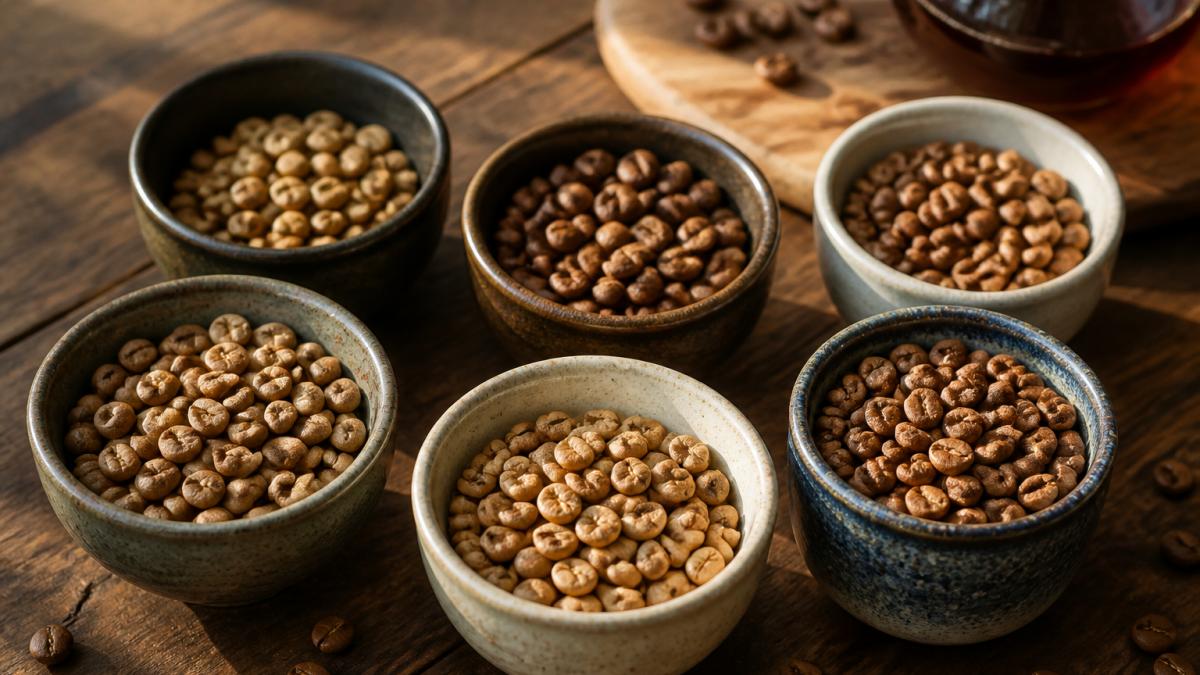
Single-origin coffee's power emerges when you compare regions side by side. Each origin expresses its own profile based on altitude, processing method, and soil type. Here's how the most distinctive light roast single origin beans stack up.
| Origin | Altitude | Processing | Tasting Notes | Best For |
|---|---|---|---|---|
| Ethiopia Natural | 1700-1900 M | Full natural | Milk chocolate, fruity, caramel | Espresso, French press |
| Tanzania | 1200-1900 M | Washed | Pear, floral, jasmine, strawberry | Pour-over, drip |
| Kenya | 1700-1890 M | Washed | Bright acidity, orange, lemon, floral | Pour-over, specialty brewing |
Ethiopia Natural: fruity and floral complexity
Canvas and Clove LLC's Ethiopia Natural is a medium-light roast from the Sidama zone, where smallholders grow heirloom cultivars at 1700-1900 meters. Natural processing, where fruit dries on the bean, creates its fruity, floral character.

Its standout is complexity: milk chocolate sweetness upfront, then fruity notes that shift with brewing method. Natural processing adds body, while altitude and iron-rich Nitisols contribute balancing brightness.
It shines in espresso and French press, where body and sweetness lead; in pour-over it can feel heavy next to washed beans. At $23.99, it delivers genuine complexity.
Tanzania: bright acidity with jasmine and stone fruit
The Tanzania from Mbeya brings a different character: medium-light roasted Bourbon and Kent varieties grown at 1200-1900 meters, fully washed and dried on raised beds for clean, bright acidity.
The profile reads as jasmine and strawberry with underlying pear: brightness here means lively and effervescent, not sour. Washing strips fruit flesh before drying for cleaner flavors and higher acidity than natural-process beans, while clay mineral soil adds crispness.
Pour-over and drip highlight the bright, floral notes, and the acidity cuts through milk in a latte. At $23.99, it's an excellent entry point into how processing method shapes flavor.
Kenya: citrus brightness and effervescent body
Kenya from Othaya in Nyeri County represents washed-process craftsmanship at its peak. Grown at 1700-1890 meters with SL28 and SL34 varieties (legendary for brightness), this Kenya delivers bright acidity with orange, lemon, and floral notes.

Its effervescent body, unique to certain Kenyan beans, creates liveliness and complexity on the palate. Washed processing and high altitude combine to produce what many professionals consider the benchmark for clarity and brightness.
It demands pour-over or specialty brewing to highlight its nuance; espresso works but loses delicate floral character. The $23.99 price reflects the quality Kenyan coffees deliver.
How to Brew Light Roast Coffee for Maximum Clarity
Brewing light roast single origin beans correctly is non-negotiable; poor technique wastes the complexity you're paying for. The goal is extraction yield: pulling the right amount of flavor compounds without over-extracting (bitter) or under-extracting (thin and sour).
Water temperature and bloom time
Water temperature for light roast single origin beans should be 195-205°F.
Bloom time is the first 30-45 seconds, when you wet the grounds and let them release CO2 before full water contact. It lets grounds expand evenly for consistent extraction.
Use filtered water whenever possible.
Pour-over and extraction yield techniques
Pour-over is the gold standard for light roast single origin beans because it gives complete control over extraction. The typical ratio is 1:16 by weight: for a 25-gram pour-over, that's 400 milliliters of water.
Grind consistency matters enormously. For pour-over, aim for medium-fine, slightly finer than drip but not as fine as espresso; inconsistent grind means fine particles over-extract while coarse ones under-extract.
Pour in stages: after the bloom, pour slowly in circles to keep all grounds in contact with water. The brew should take 2.5-4 minutes.
Aim for an extraction yield of 18-22% of the coffee's soluble compounds.
Single Origin vs Blend Coffee: Why Choose One Over the Other
The answer depends on what you value in your cup. Single origin and blends serve different purposes, and understanding the trade-offs helps you choose.
Single-origin beans showcase terroir and flavor clarity: you taste the specific place where the coffee grew. The profile is distinctive and shifts season to season, an unpredictability enthusiasts enjoy, like wine from different vintages.
Blends combine origins for a consistent, balanced profile. Roasters smooth out extremes, pairing a bright, acidic bean with a fuller-bodied one. Blends are more forgiving to brew and more consistent cup to cup.
For light roast single origin beans, the choice is whether you want to taste the origin or a roaster's creative vision. Canvas and Clove LLC's offerings let you experience Ethiopia's natural-process fruitiness, Tanzania's jasmine notes, and Kenya's citrus clarity as distinct experiences; a blend would soften those edges.
Best Small Batch Coffee Roasters 2026: Sourcing and Processing Methods
Small-batch roasting is where light roast single origin beans reach their potential. Small batches allow more precise control over roast profiles and flavor development.
Canvas and Clove LLC sources directly from smallholder farmers and cooperatives, so we know the altitude, soil type, and processing method of every bean. That lets us roast for each origin's characteristics rather than forcing a generic profile.
Washed vs natural process and flavor impact
Processing method is one of the two biggest flavor factors (altitude is the other). Washed and natural processes create dramatically different results from the same variety grown in the same region.
Washed process removes fruit flesh before drying, creating cleaner, brighter acidity and emphasizing inherent flavors: higher acidity, lighter body, more floral or tea-like notes. The Tanzania and Kenya from Canvas and Clove LLC are both washed, which explains their brightness and clarity.
Natural process dries the whole fruit around the bean, letting sugars ferment into it: fuller body, more sweetness, fruity or wine-like character, lower acidity, more mouthfeel.
The choice isn't about quality but flavor preference. Canvas and Clove LLC carries both so you can taste the difference.
Altitude and soil type influence on tasting notes
Altitude is where the magic happens. Cooler temperatures at higher elevations slow bean development, building more complex sugars. Beans grown at higher elevations develop more acidity and complexity.
In the Canvas and Clove LLC lineup, Ethiopia Natural grows at 1700-1900 meters, Tanzania at 1200-1900, and Kenya at 1700-1890. The higher-altitude origins show more brightness and complexity; lower-altitude beans express more body and sweetness.
Soil type influences mineral content and nutrients: volcanic loam (Colombia, Costa Rica) creates balanced, sweet coffees; iron-rich Nitisols (Ethiopia) contribute brightness; clay minerals (Tanzania, Nicaragua) create crisp, clean flavors.
Storage and Freshness: Keeping Your Beans at Peak Quality
The moment roasting stops, the clock starts ticking. Light roast single origin beans are best after roasting.
Store whole beans in an airtight container away from heat, light, and moisture. Oxygen causes oxidation that degrades oils and flavors, so an opaque, airtight container in a cool, dark cupboard is ideal.
Grind immediately before brewing. Ground coffee exposes far more surface area to oxygen, so it stales much faster.
Buy in quantities you'll use within a reasonable timeframe. That's why Canvas and Clove LLC sells single-origin beans in smaller quantities at $23.99 per bag: the right amount to use while beans are at their peak.
Budget-Friendly vs Premium Light Roast Options
Canvas and Clove LLC's entire single-origin range is priced at $23.99 per bag, reflecting our commitment to quality without unnecessary markup.
The real budget decision is understanding what you're paying for. A light roast single origin bean at $23.99 costs roughly 40-50 cents per cup. Brewing at home is significantly more economical even at premium prices.
The trade-off between budget and premium comes down to freshness and sourcing. Premium roasters like Canvas and Clove LLC roast small batches and source directly from farmers for fresher beans and more quality control.
New to light roast single origin beans? Start with one bag and taste the difference freshness and origin make. At $23.99, it's a modest test of whether the complexity justifies the price for your palate.
Choosing light roast single origin beans is an investment in your daily ritual. Canvas and Clove LLC's direct-trade sourcing, small-batch roasting, and transparent roast dates ensure every bag delivers the clarity that makes single-origin coffee special. Explore our current single-origin selections and discover how freshness and craftsmanship elevate your coffee experience.
Frequently Asked Questions
What defines a light roast coffee bean?
Light roast coffee is removed from heat just after the first crack, preserving more of the bean's origin characteristics and acidity. This roast level highlights terroir, processing method, and altitude influences, delivering brighter, more complex flavor profiles than darker roasts. Light roast beans retain more of their origin's natural sweetness and floral or citrus notes.
How should I brew light roast single origin coffee to get the best flavor?
Use water heated to 195-205°F and a pour-over method for optimal extraction. Bloom your grounds for 30-45 seconds to allow degassing, then pour slowly to achieve even extraction. A brew ratio of 1:16 (coffee to water) works well. Light roasts require careful attention to water temperature and grind consistency to highlight their delicate flavor clarity.
Why choose single origin beans over blends?
Single origin beans offer distinct flavor profiles tied to specific regions, altitudes, and processing methods. They reveal terroir characteristics like floral notes from Ethiopia or citrus undertones from Kenya. Blends combine beans from multiple origins to create balanced, consistent flavors. Single origins are ideal if you want to explore how altitude, soil type, and washed versus natural processing affect your cup's tasting notes.
How does altitude affect the flavor of single origin beans?
Higher altitude beans grow more slowly, developing denser seeds with more complex sugars and acids. This creates brighter acidity, cleaner finish, and more pronounced flavor clarity. Ethiopian beans at 1,700-1,900M showcase fruity brightness, while Kenyan beans at 1,700-1,890M deliver citrus effervescence and floral complexity due to their high-altitude terroir.