

Natural Coffee Processing Methods Explained
Last Updated: November 3, 2026
Quick Summary
Natural coffee processing is the method of drying the whole coffee cherry with its fruit still attached, rather than removing the fruit first. That contact lets the seed absorb sugars from the pulp during drying, which shapes the sweetness, body and fruit character in the cup.
- Cherries are picked ripe, sorted, and spread on raised beds to dry in the sun.
- Beds are turned regularly and covered at night or during rain to keep fruit dry.
- Drying continues until the green bean reaches a measured, stable moisture target.
- Natural lots are often rested for several weeks after milling before shipping.
- Poor drying control can cause mold or over-fermentation that roasting cannot fully fix.
Table of Contents
- What Coffee Processing Means and Why It Shapes Your Cup
- How Natural Coffee Processing Works, Step by Step
- Coffee Process Natural vs Washed: Where the Flavor Difference Comes From
- Honey Processed Coffee and the Middle Ground
- Quality Risks: Mold, Defects, and Food Safety in Natural Processing
- Experimental Coffee Processing Methods and Controlled Fermentation
- How to Choose and Brew a Natural-Process Coffee at Home
- Frequently Asked Questions
What Coffee Processing Means and Why It Shapes Your Cup
Natural coffee processing methods explained in simple terms come down to one step: drying the whole coffee cherry with its fruit still attached, rather than removing the fruit first. That single decision shapes the sweetness, body and fruit character you taste in the cup. Canvas and Clove LLC sources coffees with this in mind, so understanding the process helps you choose beans that match the flavor you want.
Processing is the work that happens between harvest and roasting. It turns a ripe cherry into the dried green bean a roaster can work with. Each method, whether natural, washed or honey, decides how much of the fruit's sugar and mucilage stays in contact with the seed during drying. That contact is where most of the flavor difference begins.
Many producers treat processing as the most consequential choice they make after picking. A mistake in drying can introduce mold or fermentation defects that no roaster can fully fix later. This is why processing is discussed so often among specialty buyers.
How Natural Coffee Processing Works, Step by Step
In the natural method, producers pick ripe cherries, sort them, and spread them to dry in the sun with the fruit intact. The whole cherry becomes a drying unit, and the seed inside absorbs sugars from the surrounding pulp over several weeks. What separates a clean, sweet natural from a muddy, fermented one is how tightly the producer controls the drying curve.
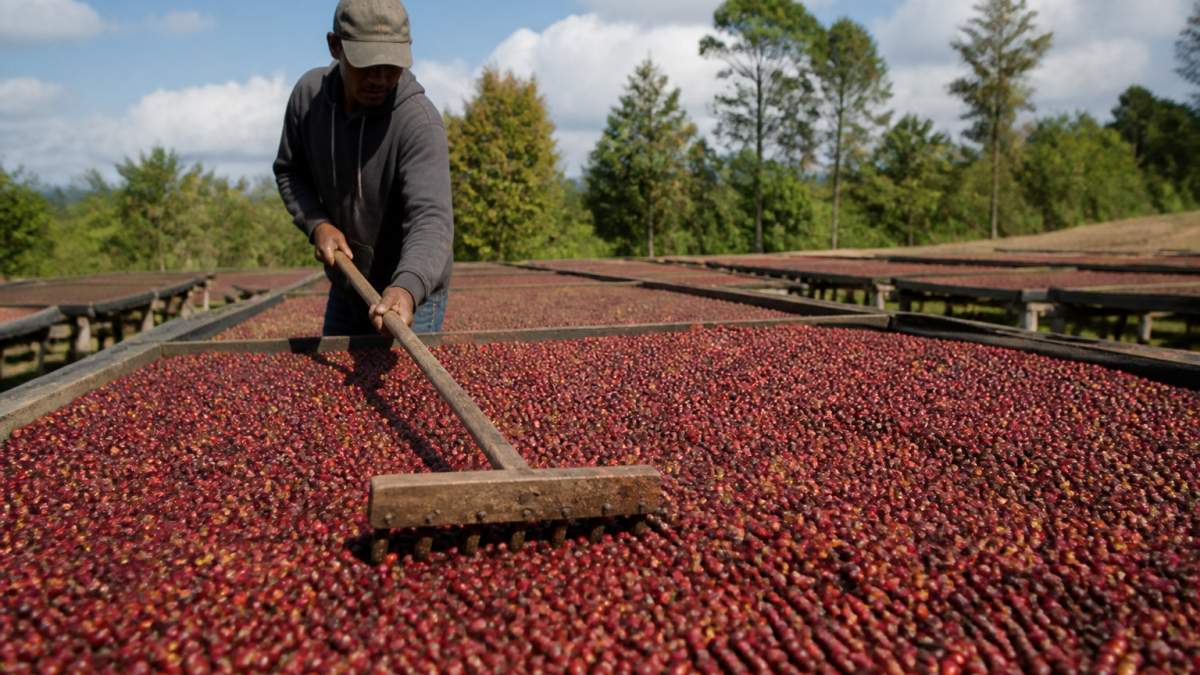
!Ripe red coffee cherries spread thinly across a sunny raised drying bed at a smallholder farm, with a worker raking them by hand
Harvesting and sorting ripe cherries
Harvest quality sets the ceiling for everything that follows. Pickers select cherries at peak ripeness, because underripe fruit dries unevenly and overripe fruit ferments before drying is complete.
Sorting after harvest removes floaters, damaged cherries and unripe fruit, which reduces defects in the finished lot. The goal of sorting is a uniform lot, because a single underripe cherry dries at a different rate than its neighbors and creates an uneven bed.
Drying times, turning, and moisture targets
Cherries are spread on raised beds and turned regularly so they dry evenly.
Turning frequency follows the moisture curve. Producers also cover beds at night or during rain to keep dew and sudden showers from re-wetting the fruit.
Drying takes time that depends on weather and altitude, and the target is a stable moisture content in the green bean, which is measured rather than judged by feel. Under-drying invites mold and uneven fermentation in storage.
Hulling and resting the dried cherry
Once moisture is on target, the dried fruit, now a dark, shriveled husk, is removed in the dry mill. Hulling strips the dried skin, pulp and parchment in one pass, leaving the green bean. Because the fruit layer is thick and sticky, natural lots often need more careful hulling and cleaning than washed lots, and the mill may run them through additional density and size sorting afterward. Many producers rest the milled green coffee for several weeks before shipping so the bean stabilizes and the most volatile fermentation notes settle.
Why the parameters vary by producer
This is why two natural coffees from the same region can taste very different, the method is the same, but the drying curve is not.
The steps of natural processing, from picking through drying and hulling, are summarised below.
| Step | What to do | Time or frequency |
|---|---|---|
| Harvesting and sorting | Pick ripe cherries and remove floaters, damaged and unripe fruit | Before drying begins |
| Drying on beds | Spread cherries on raised beds and turn them regularly | Several weeks, depending on weather and altitude |
| Covering beds | Cover beds at night or during rain and dew | Nightly and during rain |
| Moisture check | Measure green bean moisture until it reaches target | Before hulling |
| Hulling | Strip dried skin, pulp and parchment in the dry mill | Once moisture is on target |
| Resting | Rest milled green coffee so it stabilizes | Several weeks before shipping |
Coffee Process Natural vs Washed: Where the Flavor Difference Comes From
Washed processing removes the fruit mechanically before drying, leaving only the parchment-covered seed to dry. Natural processing keeps the fruit in contact with the seed, which tends to produce sweeter, heavier-bodied coffees with pronounced fruit notes.
Neither method is objectively better. A washed coffee rewards buyers who want precision and clarity, while a natural coffee suits those who enjoy bold, fruit-forward profiles. The Ethiopia Natural from Canvas and Clove LLC is listed as fully natural processed, sorted by hand and dried on raised beds, with milk chocolate, fruity and caramel tasting notes.
Best for: drinkers who want fruit-forward sweetness and a heavier body. Skip if: you prefer a bright, tea-like cup with crisp acidity.
Honey Processed Coffee and the Middle Ground
Honey processing sits between the two extremes. The producer removes the outer skin but leaves some or all of the mucilage, the sticky sugary layer around the seed, to dry on the bean. The amount of mucilage left behind, often described by color, determines how much sweetness and body the coffee carries.
Honey coffees sit between washed and natural styles in sweetness and clarity, and the remaining mucilage makes careful drying important.
Quality Risks: Mold, Defects, and Food Safety in Natural Processing
Natural processing carries higher quality risks than washed processing. Because the fruit stays on during drying, any lapse in temperature control, airflow or turning can allow mold to develop or fermentation to run past the intended point. Mold and fermentation defects can taint the cup with off-flavors that persist through roasting. The useful question is which specific failures occur and how producers catch them.
The main defect mechanisms
Most natural-processing faults fall into a few recognizable patterns:
- Mold and mustiness. Slow drying, thick beds, poor airflow or re-wetting from rain and dew let surface molds grow on the fruit. In the cup this reads as musty, earthy or medicinal. Visible fuzz, clumping cherries or a sour-smelling bed are early warnings.
- Over-fermentation. When cherries sit wet and warm too long, often in the first days before turning begins, fermentation runs past the intended fruitiness into vinegar, nail polish or hard alcohol notes. This is the defect most often confused with 'natural character,' which is why buyers should distinguish clean fruit from fermented funk.
- Phenolic and medicinal taints. These can come from mold, from contact with contaminated surfaces, or from cherries that were damaged before drying and began rotting in the bed.
- Uneven drying. Mixed ripeness or inconsistent turning leaves some beans wet while others are dry, producing a lot that tastes flat in places and fermenty in others.
- Contamination risks. Drying on bare ground, dirty patios or beds shared with other crops raises the chance of foreign matter and microbial contamination. Food-safety-minded buyers increasingly ask about drying surfaces, storage conditions and pest control.
Practical controls producers use
Producers manage these risks through strict sorting, consistent turning, thin and even bed layers, and close monitoring of moisture content. In practice that means float-sorting and hand-picking before drying, keeping beds at the thin depths described above, turning on a schedule tied to moisture, covering beds at night and in rain, and measuring moisture with a meter before hulling. Many also use shade or partial shade in hot climates to slow drying and avoid case-hardening, and they keep dried cherries in breathable bags in dry, ventilated storage rather than sealed damp containers.
The producer economics and environmental trade-offs
Natural processing is often described as the low-water option, and that is true: it uses little to no water compared with washed processing, which relies on large volumes for depulping and channel washing and generates wastewater that must be managed. But the trade-off is exposure. Naturals depend on dry, stable weather for weeks, so a single rain event late in drying can ruin a lot or force extra sorting and re-drying.
Land and energy use also differ. Naturals need more drying area per unit of coffee because whole cherries take up more space than parchment, and mechanical drying, where used, adds energy cost. None of this makes natural processing automatically sustainable or automatically risky, it makes it a set of trade-offs that producers weigh against their climate, labor supply and buyer demand. Understanding those trade-offs is part of understanding why a well-made natural coffee costs what it does and why consistency varies from lot to lot.
Experimental Coffee Processing Methods and Controlled Fermentation
The evidence for flavor claims from experimental methods is still developing, and results depend heavily on the producer's skill. Treat bold tasting notes from experimental lots as a starting point for your own palate rather than a guarantee. Traditional naturals remain the reference point most roasters use to judge these newer styles.
How to Choose and Brew a Natural-Process Coffee at Home
Start by choosing a coffee whose processing method is listed on the bag, then match the origin to the flavor you want. For a fruit-forward natural, the Ethiopia Natural is a good starting point, and you can compare it with the Bali Blue, a med-dark roast with dark chocolate, molasses and brown sugar notes. Canvas and Clove LLC also offers Colombia and Brazil Santos options if you want to compare different single-origin profiles side by side.
For more guidance on picking an origin, read How to Identify Flavor Notes in Yirgacheffe. If you are ready to brew a fruit-forward coffee, our How to Brew Earthy Coffee Notes: A Step-by-Step Guide walks through the method, and How Long to Bloom Coffee: 30 to 60 Seconds Explained covers the timing in detail. To see what other roasters offer, Best Small Batch Coffee Roasters 2026: Top Picks compares several options.
You can also try the Ethiopia Natural to taste a full natural-process coffee for yourself.

Frequently Asked Questions
What is the difference between natural and washed coffee?
Natural coffee is dried with the whole coffee cherry still around the seed, so the sugars and fruit pulp soak into the bean during drying. This usually produces a fruit-forward, sweeter, heavier-bodied cup. Washed coffee removes the pulp mechanically and ferments the mucilage off before drying, which tends to give a cleaner, brighter, more acidic profile that shows the origin's character more directly. Neither is better overall; the choice depends on the flavor you want and the quality control the producer can maintain.
How does honey processing differ from natural processing?
Honey processing removes the skin but leaves some or all of the mucilage on the bean while it dries. The sticky layer adds sweetness and body without the full fruit intensity of a natural process. Natural processing dries the entire cherry, so the bean is exposed to more fruit sugars and more risk of uneven drying or mold. Honey processing sits between washed and natural in both flavor and risk.
What are experimental coffee processing methods?
Experimental methods change variables such as fermentation time, temperature, oxygen exposure, or the addition of yeasts and fruit. Anaerobic fermentation seals cherries or beans in tanks with limited oxygen to build specific flavors. These methods can produce distinctive profiles but require careful control, since uncontrolled fermentation can cause off-flavors or defects. Producers should document each batch so results can be repeated or adjusted.
How can you tell whether a coffee is naturally processed?
Check the bag or product page for the process listed, such as natural, dry process, or sun-dried. Tasting notes like blueberry, strawberry, or wine-like fruitiness often indicate a natural process, though origin, roast, and variety also affect flavor. Canvas and Clove's Ethiopia Natural is full natural, sorted by hand, and dried on raised beds, so you can see the process directly on the listing before you brew.
Natural coffee processing rewards careful buyers who understand how drying shapes flavor. Choose beans whose processing method and origin match the cup you want, and let the bag's details guide your next purchase.
